Hello! In this tutorial, we are going to learn how to identify our most common tree seeds . Are you ready? Lets get started!
Ash seeds (keys)
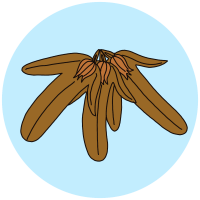
Ash seeds have a 'seed' at the top, and a long, thin papery wing underneath. They dangle in bunches from the branch tips.
Field maple
Field maple seeds are wide, large and stick out horizontally when in their pairs. They are often tinged with pink.
Hornbeam
Hornbeam seeds consist of a seed at the top, nestled between a three-lobed papery wing around and underneath.
Linden
Linden seeds grow in small clusters of 2-4 at the tip of the stem, which is wrapped around by a light, membranous leaf.
London plane
London plane seeds are small, tufted seeds, which grow in fuzzy balls, dangling beneath the branches.
Norway maple
Norway maple seeds are medium sized, frilly round the edges and grow in pairs, which stick out diagonally.
Pine
Pine seeds come in different shapes and sizes, but have a seed at one end, and a larger, thin, papery wing.
Sycamore
Sycamore seeds are small, and grow in pairs that hang close together, with the seeds at the top and wings beneath.
Wych elm
Wych elm seeds consist of a flat, round seed nestled in the middle of a flat, round, thin, membranous wing.
What are seeds?
Seeds are basically the babies or offspring of parent trees. They are produced following pollination of the trees' flowers and contain all the genetic material of the tree. Inside, they have a supply of food and nutrients ready to start their journey into new trees and in fact, they are specially adapted to disperse away from their parent trees by flying, floating, bouncing or rolling away (or being eaten and taken away - sometimes inside a juicy fruit!) This helps them find the space to grow and mature without competing with their parents for water, nutrients and sunlight.
Which trees have nuts and seeds?
There are many sizes and shapes of tree seeds, but usually, we only notice the larger sized seeds. The nine seeds you are likely to notice on your nature walks: ash, field maple, hornbeam, linden, London plane, Norway maple, pine, sycamore and wych elm. Some of the smaller seeds you might come across, are alder, birch and willow.
The six most common 'nut' producing trees, are: beech, hazel, horse chestnut, oak, sweet chestnut and walnut. You can learn to identify our most common nuts here.
Summary
Well, there we go! I hope you enjoyed this tutorial and have a better idea now, of how to identify our most common tree seeds. To be notified about new nature walk tutorials, you can join the Nook by clicking the button below x
what next?
Like this:
LikeLoading…
How to identify our most common helicopter seeds
Identifying Helicopter Seeds
In this tutorial, we will learn about how to identify helicopter seeds.
Here in Ireland and the British Isles, you are most likely to find the following helicopter seeds:
Field maple
Norway maple
Sycamore
These three seeds may look very similar, but there are some easy ways to tell them apart. So, let's take a look and learn a bit about them.
How to identify our helicopter seeds
Field maple seeds
Field maple seeds have the greatest angle of the three and grow almost horizontally away from each other. Each seed is curved in an upward scoop from the bottom.
Norway maple seeds
Norway maple seeds also grow far apart from each other, but at a closer angle than field maple seeds. Each seed is broad at the tip and has a wavy appearance to its edges.
Sycamore seeds
Compared to field maple and Norway maple, sycamore seeds are smaller and they grow much closer together. Each seed is rounded at the tip and curves outwards at the bottom.
What are helicopter seeds?
Have you ever asked yourself, what are helicopter seeds and why do they have wings?
Well, there are two types of flying seed - parachute seeds and winged seeds. Helicopter seeds are winged seeds. Their wings are single, stiff, flat membranes, which are attached to the actual 'seed' bit and designed to help the seed catch the wind as it falls from the tree and fly away. Theis helps it move away from its parent tree so it is not competing for food, water and sunlight.
The reason they are called helicopters is because of the way they spin as they fall from the tree. But, they have other names too, including spinning jennies, whirligigs and whirlibirds. But their proper name is a samara.